The two weeks of this year's Roland Garros showed once again that top performance is rarely decided by talent alone. It is much more about strategy, the team, and how someone handles the difficult moments.
Maybe that is why I thought again of Andre Agassi's book Open, which for me is one of the best athlete autobiographies, and also one of the best books about performance and deliberate self-building.
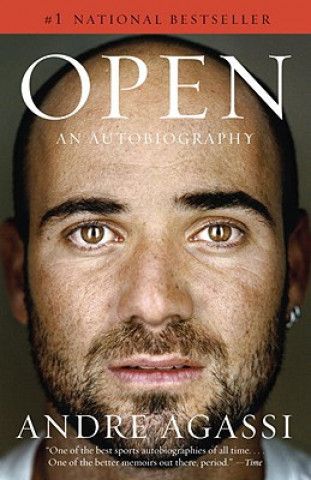
I like reading the biographies of people who made it to the very top of their field. Not only business leaders but athletes as well. It is interesting to see how they think, what decisions they make, and what lies behind outstanding performance.
Tennis plays an important role in our family's life anyway, but this book goes far beyond sport. It is really about deliberate planning, data-driven decisions, strategy building, and putting together the right team.
Agassi's father famously believed in numbers. He calculated roughly how many balls his son had to hit to become world number one. One million hits a year. He built the famous ball machine, the "Dragon", and executed the plan with astonishing consistency.
While reading, I kept thinking about how much we talk today about data-driven operations. KPIs, metrics, performance indicators. Agassi's story shows how powerful the combination of deliberate planning and consistent execution can be.
The book's other big lesson for me was team building.
As a coach, Brad Gilbert brought a completely new mindset to Agassi's career. He was not looking for perfect tennis, he was looking for how to get the best possible result out of the available resources. One of his best-known pieces of advice was simple: you do not have to be the best player in the world, only better than the one standing on the other side of the net today.
And Gil Reyes provided, for decades, the physical and mental foundation without which the comeback and long-term success would hardly have been possible.
But what really makes Open stand out is its honesty.
Few autobiographies show the inner struggles of a world-class athlete this rawly. Reading the match descriptions, you can almost feel the inner dialogues on court, the fear, the anger, the self-doubt, and the euphoria.
Agassi writes with brutal honesty about his own vanity, his hair loss, the wig, and the road that led to accepting himself.
And throughout the book runs one of its most interesting tensions: Agassi hated tennis. He hated its traditions, its constraints, and often the whole world around it. Yet he returned to it again and again. Even when his body could barely take it and he was struggling with constant pain.
For me, Open was not primarily a tennis book. It is much more a book about how talent alone is not enough. Strategy, consistency, data, choosing the right people, and self-knowledge matter at least as much.
And along the way, it is simply one of the best biographies I have ever read.