
Software partner for healthcare and medical technology

Medical software that works in daily practice and passes regulatory review.

Hospitals, clinics, laboratories and medical device companies work with Silurus Software when software has to save time for clinical staff and still meet medical device rules. We look at how your work runs today, then build, connect or document the software that fixes it.

Hospitals, clinic groups and laboratories work with us on clinical AI and digitalisation. We advise before they buy, connect the systems they already run over HL7, FHIR and DICOM, and build the software no product covers. How we work with hospitals

40+ Engineers · Budapest & Singapore
25+ Years of our founder in MedTech
2017 Founded · Hungarian HQ
AAA D&B rating, awarded 2025
Clients, research and networks

Trusted in MedTech and medical research.

Clients
Research
Networks
Where we start

How our clients find us.

Medical device makers call us when an audit or a submission is close, when a product needs engineers who know the medical software standard IEC 62304, or when AI has to work inside a device or a hospital. You get the software and the software documentation for your technical file or your FDA submission, which you file.

Services

We build the software and its regulatory file.

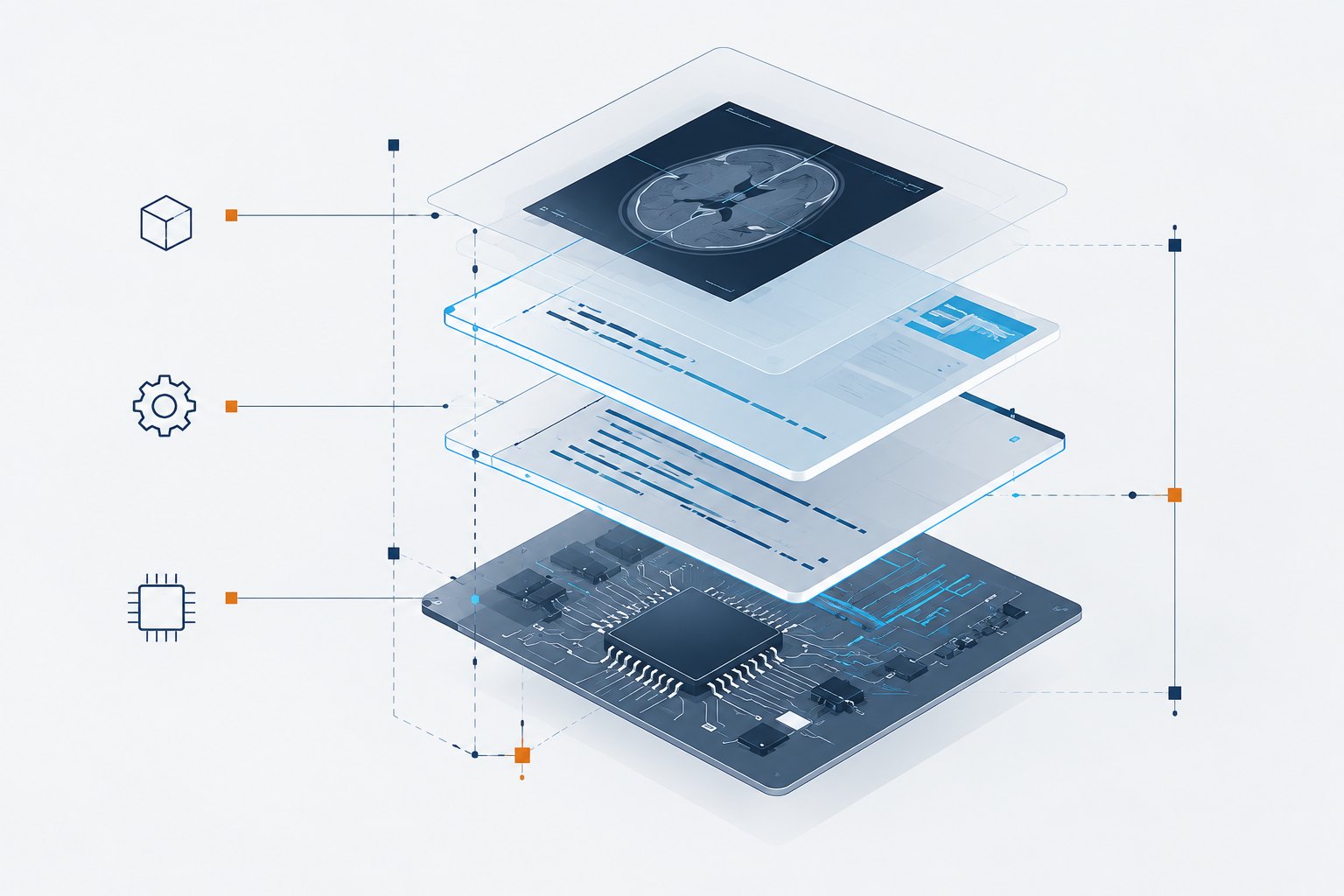
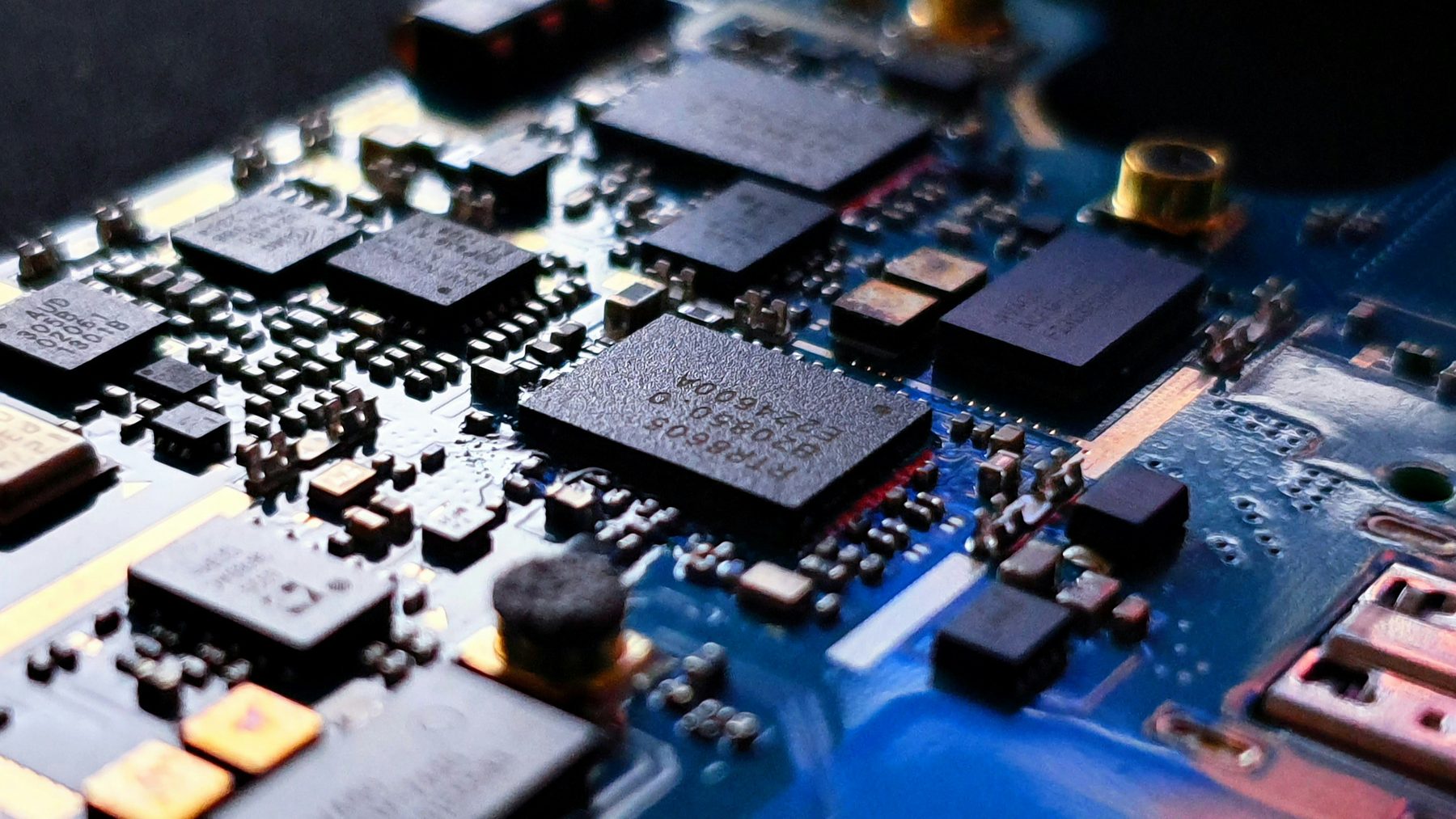
Exploded view of a medical device software stack, from the circuit board to the imaging application
Engineering

Medical device software and firmware.

C++, C#, .NET and Python teams for imaging, radiotherapy and embedded devices. They take on a defined work package or stay with a product for years.

C++C#.NETPythonRTOSDICOM
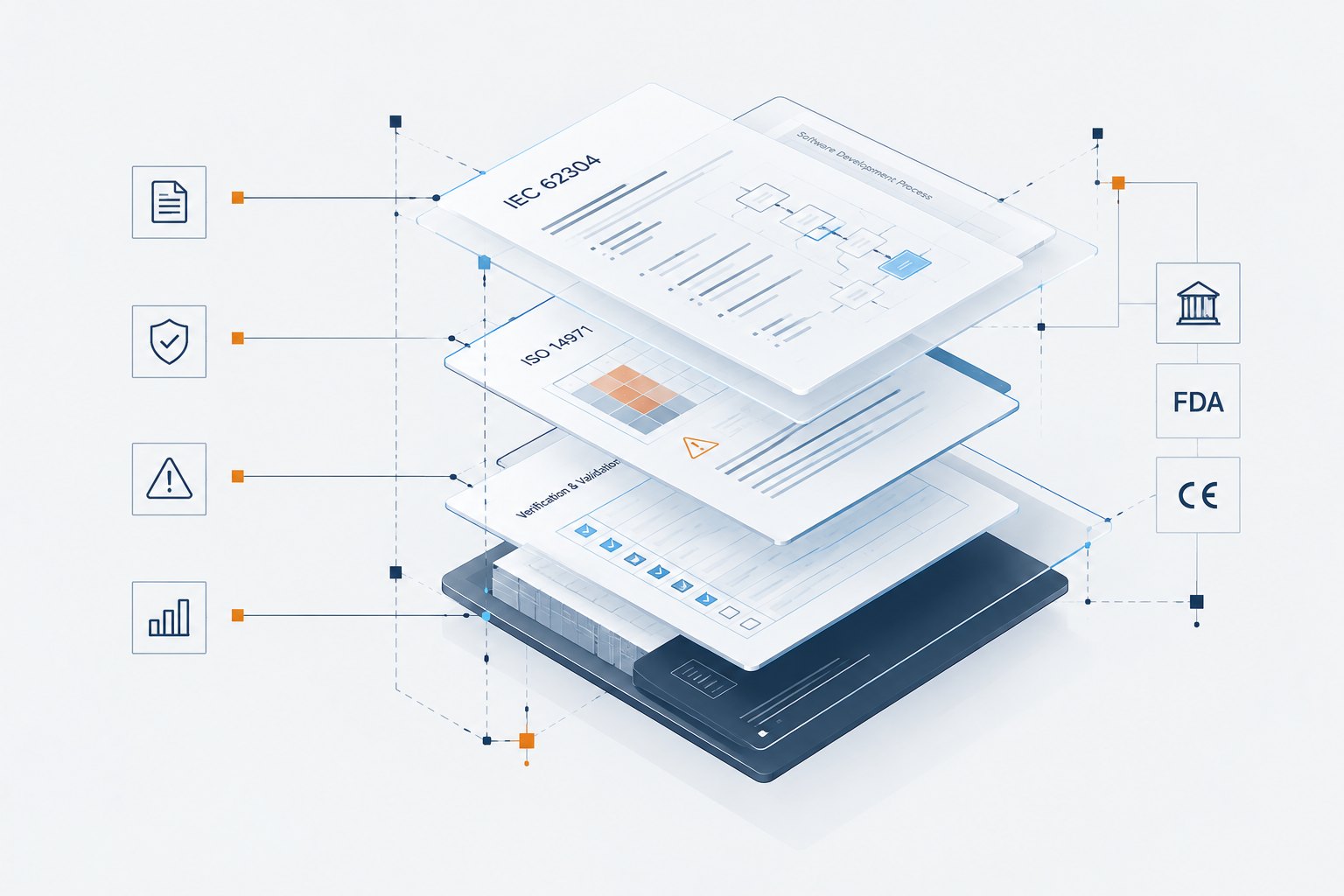
Layered regulatory documents for IEC 62304, ISO 14971, FDA and CE marking
Regulatory

The documents an auditor checks before certification or clearance.

Gap analyses, retrospective IEC 62304 files, verification and ISO 14971 risk files, written to the manufacturer's templates for the notified body or the FDA.

IEC 62304ISO 14971SOUPSBOMTraceability
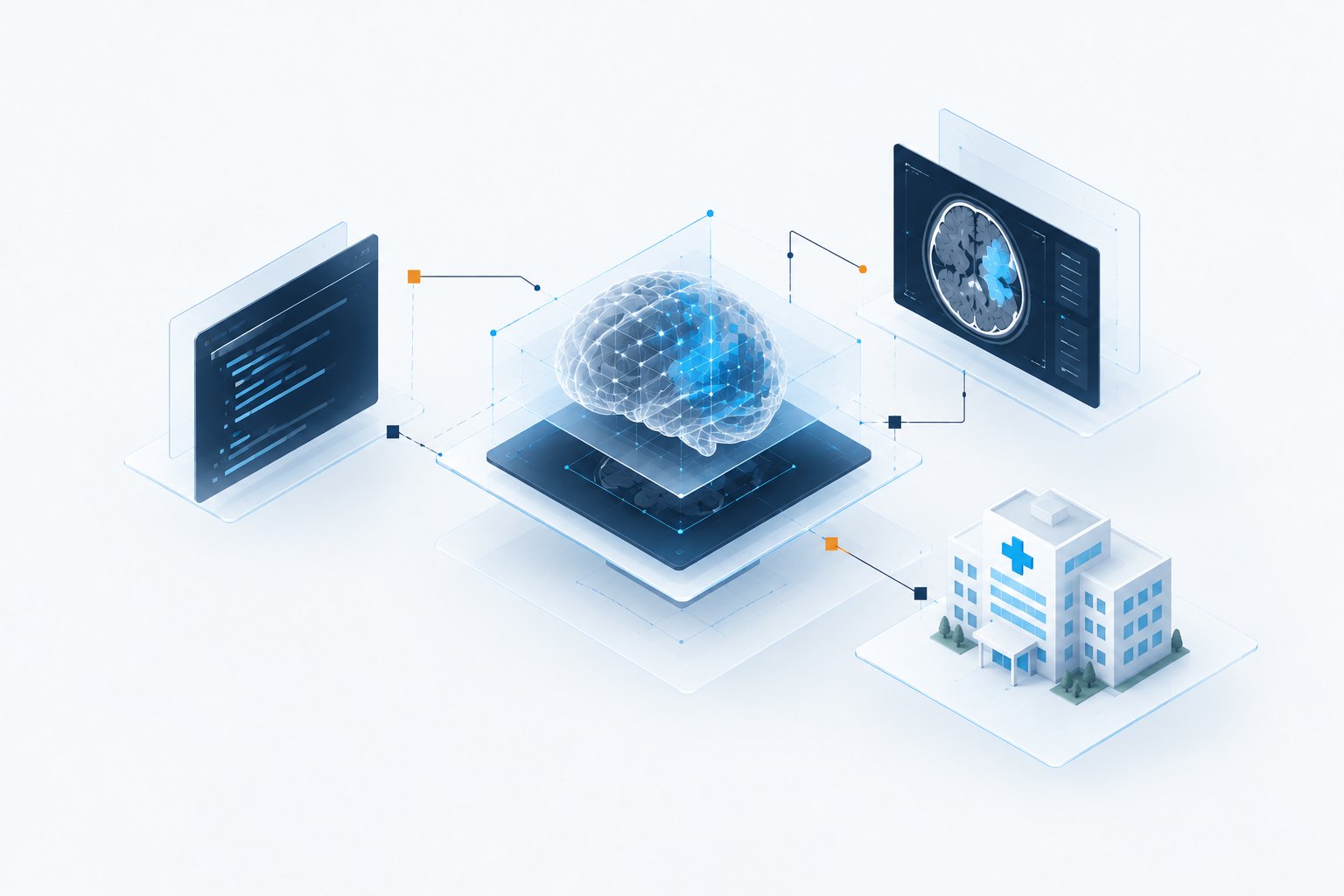
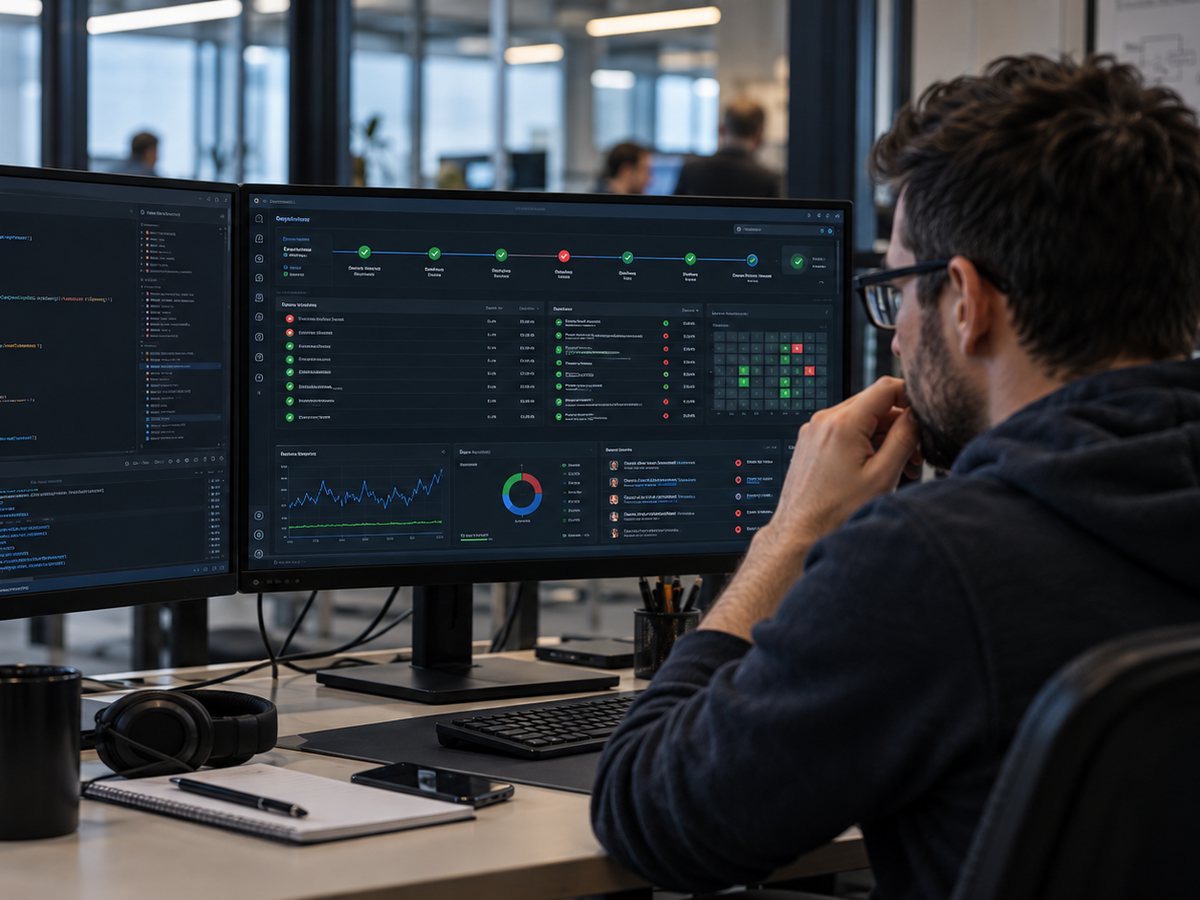
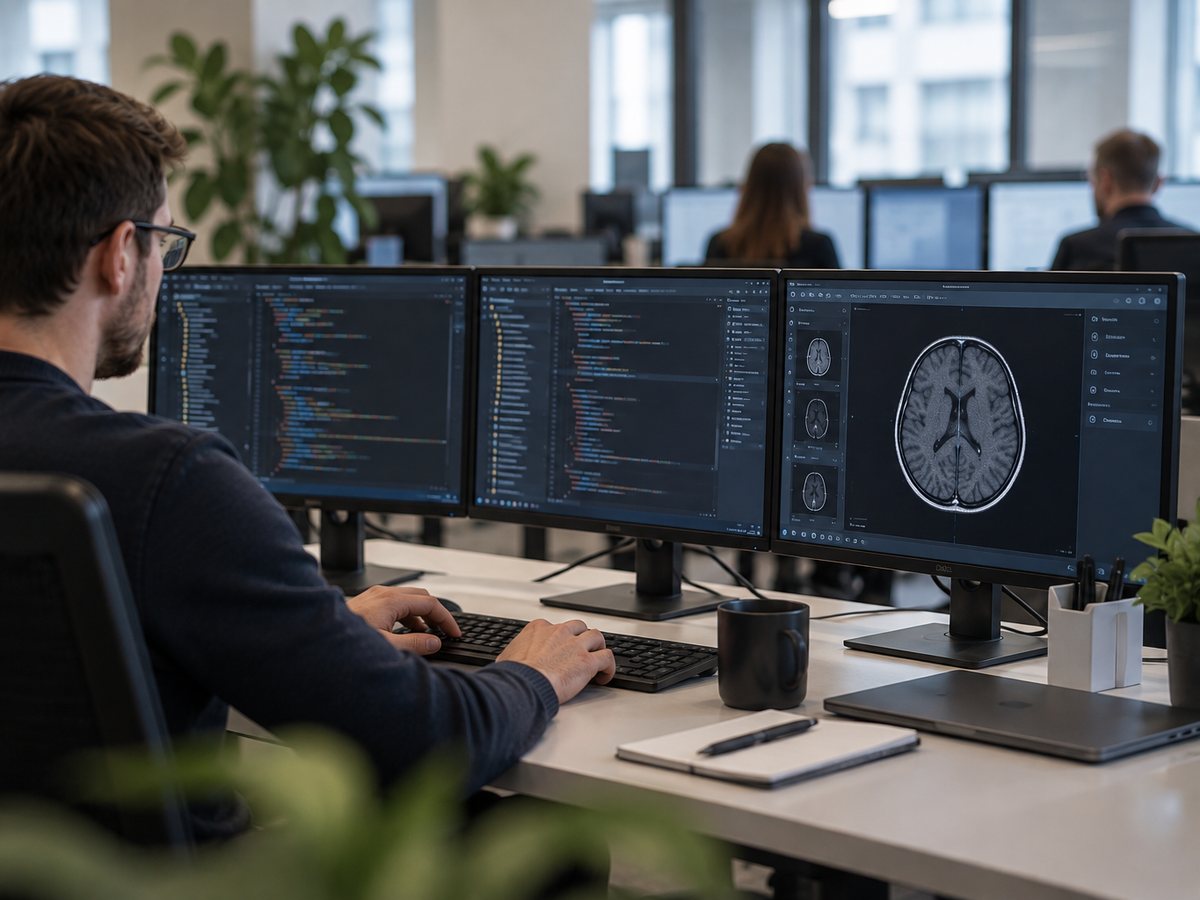
AI model connected to source code, medical images and a hospital
AI

AI under medical device regulation.

A working model becomes a medical device, hospitals get advice before they buy clinical AI, and AI coding tools are brought under IEC 62304.

PACSPCCPEU AI ActHL7 FHIR
Hospitals and clinics

More time with patients, less time on paperwork.

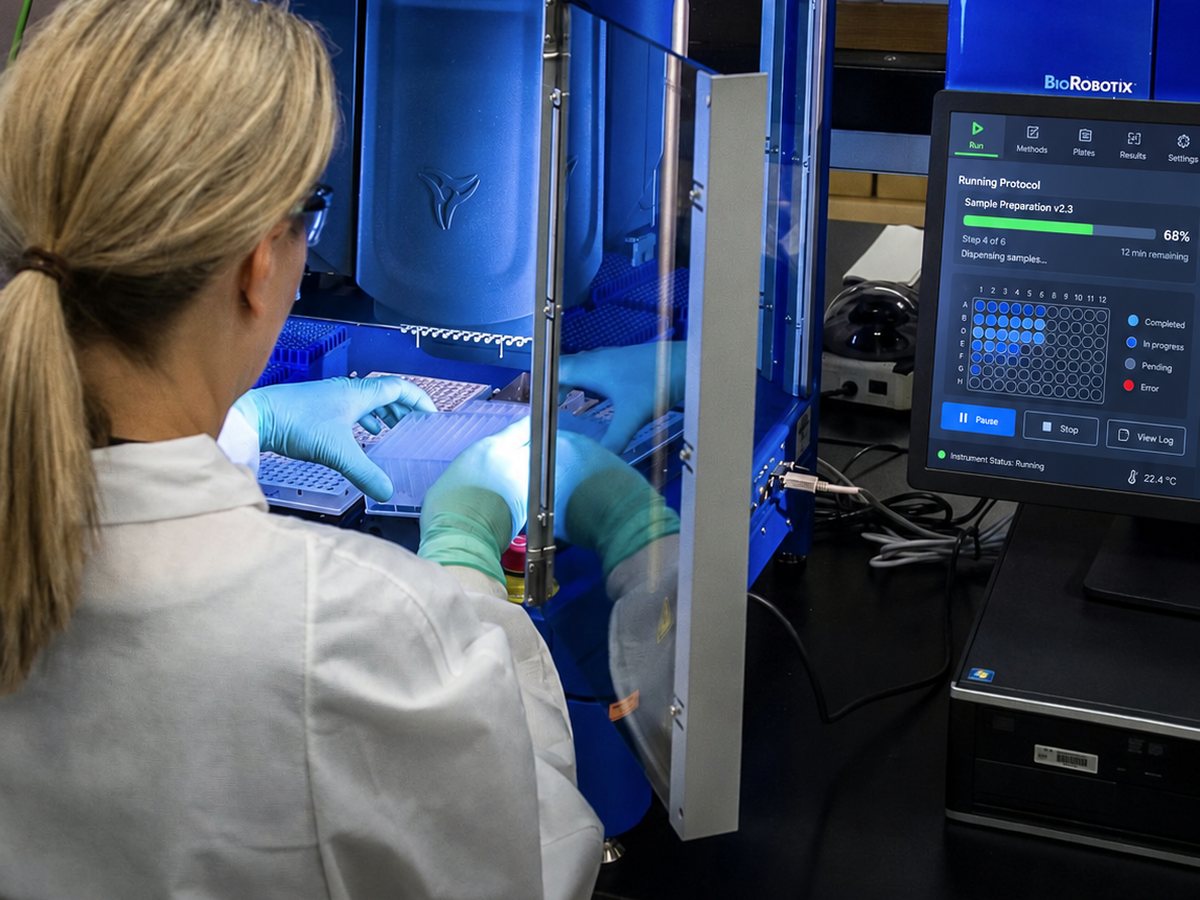
Booking, documentation, reports and moving data between systems take hours of every shift. When software and AI handle the manual steps, doctors and nurses spend that time with patients, and the clinic delivers better care with the staff it has.

We start by sitting with your teams and looking at how the work runs today. We do not sell any AI products or clinical systems, so you get independent expert advice.

Every provider project starts with one separately contracted step with a written result, so you can judge the work before you commit to more.

Talk to our management
Where to start · IEC 62304 gap analysis

Know how far your software is from IEC 62304 before you commit to a date.

An audit, a submission, an MDR transition or a supplier change is coming, and nobody can say how complete the software file is. A gap found now becomes planned work. One found by the notified body or the FDA delays certification or clearance.

In three weeks a senior engineer who knows your device's technology and a regulatory specialist review the documents, the source code and the process of one software system against IEC 62304, ISO 14971 and your EU MDR or FDA route.

It is a small first order with a defined scope. The report is yours, and the remediation is a separate decision: your own team, Silurus Software, or both.

The offer
Scope
One software system: its documents, code and process
Result
Every gap ranked by severity, a remediation plan and a walkthrough with your leads
Duration
Three weeks from kickoff to the report
Start
Within two weeks of the signed order
Price
Quoted after a first look at the code and the documents
Sectors

Engineers who already know your sector.

Device makers and healthcare providers face different problems.

Engagement models

Three engagement models.

A · Project delivery

You need a module, a feature or a submission done by a fixed date.

Scoped statement of work and milestones, embedded technical lead and PM.

  • Defined deliverables and acceptance criteria
  • Verification artefacts on delivery
  • Handover or continued support
  • Inside your QMS
Best forwell-defined modules, replatforming, submissions
C · Team extension

Your team is short of one or two specialists.

Each engineer is selected for the role you need: development, testing, DevOps or regulatory work.

  • Direct integration with your team's process
  • Team size adjusted to your release plan
  • An architect part time, if you need one
  • Bound by NDA from the first day
Best forcapacity gaps, a missing specialist skill
In their words

Partners on working with Silurus.

I have been working with Silurus for many years, and I truly value them as a trusted partner. I greatly appreciate their flexibility, responsiveness, and commitment to supporting our needs. Their recruitment process consistently delivers talented professionals who quickly become productive members of our extended team. The consultants working with us demonstrate strong technical expertise, deliver high-quality work, and collaborate exceptionally well across teams.

R&D LeadEuropean medical technology manufacturer

Silurus delivered a solid solution for one of our projects, with clear communication, reliable output, and on-time delivery. The team was responsive and easy to collaborate with throughout the process.

Zign Group
Nico DrostCEO, Zign Group

Silurus translated our research vision into clear, technically well-structured content for the European project proposals we led at the University of Bologna, collaborating seamlessly with both our research group and the university administration along the way.

University of Bologna
Professor Rita FioresiDipartimento di Farmacia e Biotecnologie, University of Bologna

LeoShape, our orthotic design software, is used in the US, and we needed it reviewed from several FDA angles. Silurus’s consultants gave expert, precise answers on verification and validation, risk management, threat modelling and cybersecurity, and built a well structured plan with us. Their engineers also advised on our order management system’s frontend architecture. Answers came fast, and we could reach them anytime. We turned to them with both compliance and technology issues, and they delivered each time.

LeoShape by Leopoly
Zoltán KárpátiCEO, Leopoly
Standards

Standards we build to.

These are the standards a medical device and its software are audited against. Our regulatory specialists and FDA consultants work with them every day, and we advise manufacturers on their QMS and submission strategy as a service of its own. When we develop, we work inside your ISO 13485 quality management system, so your auditor assesses your quality system, and every record we write follows your templates, for your technical documentation (EU MDR) and your design and development file (FDA). Certificates, standards and the split of responsibilities are on the Quality and standards page.

Market access FDA · EU MDR Privacy · Interoperability GDPR · HIPAA · DICOM · HL7 · FHIR Usability · Cybersecurity IEC 62366 · IEC 81001-5-1 Lifecycle · Risk management IEC 62304 · ISO 14971 Foundation · Quality system ISO 13485 The regulatory stack we operate within
ISO 13485Quality management system. The operating frame for every medical device organisation.
IEC 62304Software lifecycle requirements, maintained continuously across the project.
ISO 14971Risk management. Hazard analysis, controls and post-market surveillance, running with engineering.
IEC 62366-1Usability engineering. UI design, formative and summative evaluation, use-error analysis.
IEC 81001-5-1Health software cybersecurity. Threat modelling through to post-market vulnerability management.
DICOM · HL7 · FHIRInteroperability protocols. Production integrations against PACS, EMRs, RIS.
GDPR · HIPAAPrivacy regimes. Data handling and retention designed in at the start.
FDA · EU MDRMarket access. Design controls, technical documentation, post-market obligations for both tracks.
Independent sources

Memberships, ratings and recognition.

Industry network

Member of Medical Valley EMN

The MedTech network in Erlangen lists Silurus Software in its partner directory.

medical-valley-emn.de
Industry association

Supporting member of PRIMUS

PRIMUS is the association of private healthcare providers in Hungary, with 67 member providers.

primusegyesulet.hu
Research partner

ELTE Faculty of Informatics

Research partner of the Faculty of Informatics at Eötvös Loránd University in Budapest.

inf.elte.hu
European research partners

Partners in the EU project LOGOS

Horizon Europe project LOGOS, from 2027: University of Bologna, Masaryk University in Brno, University of Amsterdam, University of Pisa and Universidad Carlos III de Madrid.

Credit rating

Dun & Bradstreet AAA

Awarded AAA, Highest Creditworthiness, by Dun & Bradstreet in 2025.

Quality training

ISO 13485 internal auditor training

Dr. Linda Szántó, CEO of Silurus, took part in the ISO 13485:2016 internal auditor training on 10 and 11 March 2026 (SAASCO Medical and NoBoVersum) and passed the exam. Certificate dated 16 March 2026.

Certificates

ISO 9001:2015 and ISO 27001:2022

Certified management systems. ISO 9001 is valid until 28 March 2027, ISO 27001 until 25 August 2029.

Quality and standards
Recognition

Female Business Leader of the Year 2025 and The Pioneer Award 2026

Company recognitions for the business activity of Silurus Software, awarded to our CEO, Dr. Linda Szántó.

The team

The people behind Silurus.

Silurus Software was founded in January 2017 by Péter Török and Dr. Linda Szántó. Péter brings more than 25 years in medical imaging and radiotherapy software. Today we develop and document regulated software for medical device manufacturers, and help hospitals and clinics bring digital workflows and clinical AI into daily care. Engineers, EU MDR regulatory specialists, FDA consultants and AI specialists work in one team, with offices in Budapest and Singapore. We hold ISO 9001 and ISO 27001 certificates and carry out joint research with the University of Bologna and the ELTE Faculty of Informatics. See the open positions on the Jobs page.

Péter Török
Co-founder & CTO

Started as a software developer in 1999 and moved into leadership quickly, with team lead, project manager and head of healthcare roles at evosoft, then software development director at Siemens Healthcare for the syngo.via imaging platform in Erlangen.

Back in Budapest he shaped software strategy as director at evopro Holding, then led R&D teams at Mediso Medical Imaging Systems with agile methodologies. Deep C++, C# and .NET roots.

Learn more →
Dr. Linda Szántó
Co-founder & CEO

As a strategic leader she owns sales, marketing, recruitment and HR, drives international expansion, and leads the digitalisation of the company's operations, building long-term, trust-based partnerships in English and German.

Degrees in law and the humanities. Earlier at an international law firm, the national data protection authority, and in IT project management. Advisory coordinator at ELTE Faculty of Informatics on digital transformation. Female Business Leader of the Year 2025 and The Pioneer Award 2026.

Learn more →
Tamás Fodor
Head of Software Engineering

Over a decade building software for healthcare under IEC 62304. Degrees in software and biomedical engineering from BME and Semmelweis. He is accountable for delivery, keeps the engineering of every project in hand and leads our work on AI.

Contributed to a major medical imaging platform for a global MedTech company in an FDA-regulated environment, then seven years in radiotherapy software from developer to technical lead. PACS, DICOM, HL7 and DevOps, including AI-driven CT image processing on cloud platforms. Today his scope spans engineering leadership and business development.

Learn more →
András Török
CFO & Head of Singapore Office

Leads the Singapore office. More than 15 years of international experience in financial services, particularly investment banking, at global banks including Standard Chartered and UBS across Singapore and Switzerland.

Mid-level management roles across strategy, prime brokerage and institutional derivatives sales and trading. INSEAD MBA. Brings cross-region perspective on regulated industries and APAC operations to Silurus.

Learn more →
FAQ

Questions about working with Silurus.

Short answers to what manufacturers ask before a first call. Anything else, send it with your requirements and it is answered in writing.

Send your question Go to our FAQ pagePricing, contracts, NDA, team, location and languages on the FAQ page.
01

How does a project with Silurus start?

With a call, then your requirements, then an assessment or a proposal. On the call we check device type, software safety class, submission route and timeline. You send the requirements and, under NDA, the existing code and documentation. For finished software the next step is a gap analysis. For new development or added capacity it is a written proposal.

02

How much does it cost to work with Silurus?

Silurus Software does not publish a rate card, because every engagement is priced individually. Defined work packages, such as a gap analysis or a documentation package, are quoted once the scope is clear. Dedicated engineers who join your team are billed on time and materials. The written proposal states the price model and the amount before anything is committed.

03

Which devices and software do you work on?

Software in and around medical devices: imaging and radiotherapy platforms, embedded firmware, and the desktop, backend and cloud software around them, including Class IIa and IIb devices under EU MDR. The sectors overview lists every sector.

04

Will you take over an existing codebase that someone else wrote?

Yes. Two of our case studies started from existing code: a laboratory device refactored and validated in three months, and safety-critical surgical device firmware reviewed in a three week gap analysis. A takeover starts with the gap analysis, so both sides know the state of the code before a remediation is planned.

05

How large is the team, and how far can an engagement scale?

Silurus Software has more than 40 engineers. Each engagement is staffed to its work. Our longest running engagement has ten specialists working across several functional teams of one manufacturer, over several years.

06

Where are you located, and which time zone do you work in?

Our headquarters are in Budapest, Hungary, at Science Park B, and we have an office in Singapore. Budapest is on Central European Time, the same time zone as Germany, Austria and Switzerland.

Get in touch

Start a technical conversation.

Tell us what you are building. On the first call you hear whether we are the right partner for it.

Running a hospital, a clinic group or a laboratory? Talk to our management about which processes and clinical AI tools are worth changing first, and what a first step would involve.

Silurus Software

Download case studies

Get our complete case studies as PDF.